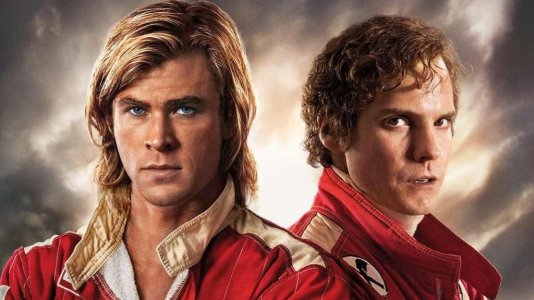
After reviewing the Senna mini-series, our resident film fanatic Luca felt compelled to review other motorsport movies in the lead-up to the F1 movie releasing in June, starting with 2013's Rush.
Rewind back the clock to 2013, I was in my final year of secondary school in the UK and I had spent all that time feeling like an outsider. Of course, since I am on the autism spectrum and having that always being made apparent made things difficult enough as is, but being also a hardcore motorsport fanatic isolated me even more.
When Rush released, I of course went to see it many times and one time, a group of people who I knew from school were there and they invited me to sit with them. That was the first time I felt accepted and not ashamed, and this movie also made me realise that you can enjoy it without being a racing enthusiast.
2025 sees another movie about Formula One in cinemas very soon, so I decided that for every month before it releases in June, I would pick a movie about motorsport to review. Rush is the most appropriate one to begin with.
The movie is centred on the rivalry between the methodical Niki Lauda and the flamboyant James Hunt, particularly as they battled for the 1976 World Championship. The former is portrayed by Daniel Brühl, who at the time was most known for his role in Inglorious Basterds, but has since appeared in the interconnected Marvel Cinematic Universe as Baron Helmut Zemo, who was the primary antagonist in Captain America Civil War.
Then of course, Hunt is portrayed by Chris Hemsworth, who we all know also from the Marvel Cinematic Universe as Thor. Both Brühl and Hemsworth really blend into their roles, Brühl more so as he had the advantage of learning from Lauda himself as he was still alive when this movie was being made. Many consider him robbed due to not being nominated for an Oscar.
Without doubt, the best thing Rush does is avoiding something that all too common is a trap most other movies fall into. Hunt and Lauda are in opposition to each other, but neither is the antagonist and instead, both become characters you equally root for. It could have been quite easy to make one of them the villain, but that line is perfectly ridden.
Whilst that is perhaps the best thing about the movie, another is the incredible depictions of the racing and mechanical elements. Seeing the pistons in the engines pumping as well as all the other internal reactions truly enhances the driving scenes. You feel part of the machine, it raises the intensity of those scenes even more than it already would have been.
Considering the era where death was quite the common occurrence, Rush does an incredible job at quite aptly giving you that rush of excitement that comes with the driving. All too often, movies depict the driving as too restrained, relying on Hollywood tropes like pressing the accelerator pedal a bit more following by toing and froing with the car next in picture.
Rush is unique in that it seems to leave aside a lot of those clichés. It is the most faithful depiction of motorsport in a movie without sacrificing the stylised aspects, and it seemingly does not rely too heavily on CGI which is noticeable in a lot of more recent racing movies.
Judging by Rush's soundtrack and how it has become such a staple in the racing community, Zimmer has set himself a high bar for the F1 movie. Every piece of the score feels mechanical and heavy hitting when it needs to be, but it contrasts with the subtle string score to build anticipation.
It feels very rooted in the era. With the movie taking place in the 70s, the movie as a whole let alone the soundtrack really captures the essence of that period, where it was considered cool to be reckless and free spirited. With its heavy hitting sounds mixed in with the action on track, the soundtrack is just incredible. Little wonder that many F1 game content creators adopt it in their videos.
Of course though, Rush is not without its flaws. Movies are rarely perfect, although in a small list of motorsport movies, Rush definitely gets very close.
The real James Hunt may have been a lot of that but he was also an outspoken activist, something that many are all too keen to overlook when attempting to paint Lewis Hamilton as "woke" by comparing him to the supposed real man's man Hunt. Of course, there was not a real plot point to explore such a thing, nevertheless he was a complex man and this movie may not have done the best job in showing that.
Lauda did say that the movie portrayed Hunt mostly accurately, whereas Hunt's son Freddie was quoted as saying that Rush portrayed his father "like a twat". Make of both perspectives what you will.
The rivalry was played up for dramatic effect, but in the epilogue at the end it does reveal that they were in fact good friends, apparently they even shared a flat when they were starting out. This is of course something that a lot of 'based on a true story' movies do, and Rush is not the worst culprit of all the movies we will be reviewing.
Both Hunt and Lauda rarely share scenes, most of the rivalry is developed away from each other. When they are on screen, for the most part it is rather heavy conflict and sparring with words, and the shift only occurs right after a prominent plot point that if you for some reason do not know, we will not spoil.
In spite of its shortcomings, Rush is a truly special movie transcending the motorsport niche and is not just an amazing motorsport movie, but an amazing movie full stop. If you ever want to show someone why you love racing, forget Drive to Survive and scroll along on Netflix to find Rush (assuming it is available on the service in your country).
 "As a fan of racing history, it should not be a surprise that Rush ranks quite highly on my list of racing movies. It may not get every single historical detail right, but I can forgive the film for moving Crystal Palace from London to Cadwell Park, for instance.
The portrayal of Hunt does not feel as deep as that of Lauda, likely because the latter was still alive when the movie was made while James had passed away in 1993 already. Still, as Luca also outlined above, neither of them is presented as the hero or the villain, with some scenes making you root for them, while others make you think 'wow, pretty unpleasant guy'. Lauda's character does massively benefit from Brühl's ability to pick up the Austrian's Vienna accent, despite being German himself - and yes, that is quite a difference compared to standard German!
What Rush does incredibly well is to create that 1970s Formula One atmosphere. It was a decade where the sport advanced rapidly, and it was not the Wild West that 1960s F1 was, but safety measures were also still in their relative infancy. As a result, fierce competition and the ever-present danger of the sport leave a very intense impression of what the Grand Prix circus must have been like.
It also serves as a great window into what the circuits looked like back in the day - like the Nürburgring that does not have its original start/finish area as that was torn down in 1983 to make room for the Grand Prix circuit. The racing scenes are also mostly excellent, which is something Hollywood tends to get wrong quite frequently.
All things considered, Rush is a firm favorite of mine, but I'm not so sure if it can quite reach the heights of 'Grand Prix' or 'Le Mans' - but I will go into detail about those two in separate reviews eventually."
Which other motorsport movies should we review and what do you think of Rush? Let us know in the comments below, and join the discussion on our forums!
Rewind back the clock to 2013, I was in my final year of secondary school in the UK and I had spent all that time feeling like an outsider. Of course, since I am on the autism spectrum and having that always being made apparent made things difficult enough as is, but being also a hardcore motorsport fanatic isolated me even more.
When Rush released, I of course went to see it many times and one time, a group of people who I knew from school were there and they invited me to sit with them. That was the first time I felt accepted and not ashamed, and this movie also made me realise that you can enjoy it without being a racing enthusiast.
2025 sees another movie about Formula One in cinemas very soon, so I decided that for every month before it releases in June, I would pick a movie about motorsport to review. Rush is the most appropriate one to begin with.
Rush Movie: What It Does Right
There are many big names involved in this movie, none more so perhaps than director Ron Howard who also directed heavily renowned movies like Apollo 13 and A Beautiful Mind. Then there is Peter Morgan, the writer of the movie, who went on to do the Netflix series The Crown. That is before we get to the incredible list of actors.The movie is centred on the rivalry between the methodical Niki Lauda and the flamboyant James Hunt, particularly as they battled for the 1976 World Championship. The former is portrayed by Daniel Brühl, who at the time was most known for his role in Inglorious Basterds, but has since appeared in the interconnected Marvel Cinematic Universe as Baron Helmut Zemo, who was the primary antagonist in Captain America Civil War.
Then of course, Hunt is portrayed by Chris Hemsworth, who we all know also from the Marvel Cinematic Universe as Thor. Both Brühl and Hemsworth really blend into their roles, Brühl more so as he had the advantage of learning from Lauda himself as he was still alive when this movie was being made. Many consider him robbed due to not being nominated for an Oscar.
Without doubt, the best thing Rush does is avoiding something that all too common is a trap most other movies fall into. Hunt and Lauda are in opposition to each other, but neither is the antagonist and instead, both become characters you equally root for. It could have been quite easy to make one of them the villain, but that line is perfectly ridden.
Whilst that is perhaps the best thing about the movie, another is the incredible depictions of the racing and mechanical elements. Seeing the pistons in the engines pumping as well as all the other internal reactions truly enhances the driving scenes. You feel part of the machine, it raises the intensity of those scenes even more than it already would have been.
Considering the era where death was quite the common occurrence, Rush does an incredible job at quite aptly giving you that rush of excitement that comes with the driving. All too often, movies depict the driving as too restrained, relying on Hollywood tropes like pressing the accelerator pedal a bit more following by toing and froing with the car next in picture.
Rush is unique in that it seems to leave aside a lot of those clichés. It is the most faithful depiction of motorsport in a movie without sacrificing the stylised aspects, and it seemingly does not rely too heavily on CGI which is noticeable in a lot of more recent racing movies.
An Incredible Score
One element that continues to stand out amongst so many other incredible aspects about Rush is its soundtrack. Hans Zimmer is considered a God in the world of movie soundtracks, and it is almost impossible to list just some of his work. Rush is one of nine movies directed by Ron Howard that he has worked on, he also scored for the 1990 NASCAR movie Days of Thunder and will also be doing the soundtrack for the F1 movie.Judging by Rush's soundtrack and how it has become such a staple in the racing community, Zimmer has set himself a high bar for the F1 movie. Every piece of the score feels mechanical and heavy hitting when it needs to be, but it contrasts with the subtle string score to build anticipation.
It feels very rooted in the era. With the movie taking place in the 70s, the movie as a whole let alone the soundtrack really captures the essence of that period, where it was considered cool to be reckless and free spirited. With its heavy hitting sounds mixed in with the action on track, the soundtrack is just incredible. Little wonder that many F1 game content creators adopt it in their videos.
Of course though, Rush is not without its flaws. Movies are rarely perfect, although in a small list of motorsport movies, Rush definitely gets very close.
What Holds Rush Back?
Hemsworth's portrayal of Hunt is great but whether it is down to him or the way he was directed by Howard, it lacks complexity. Hunt is rather exaggerated in terms of his surface level traits, with him being a hard-driving, hard-drinking, cocky, flirtatious legend that was quite abrasive.The real James Hunt may have been a lot of that but he was also an outspoken activist, something that many are all too keen to overlook when attempting to paint Lewis Hamilton as "woke" by comparing him to the supposed real man's man Hunt. Of course, there was not a real plot point to explore such a thing, nevertheless he was a complex man and this movie may not have done the best job in showing that.
Lauda did say that the movie portrayed Hunt mostly accurately, whereas Hunt's son Freddie was quoted as saying that Rush portrayed his father "like a twat". Make of both perspectives what you will.
The rivalry was played up for dramatic effect, but in the epilogue at the end it does reveal that they were in fact good friends, apparently they even shared a flat when they were starting out. This is of course something that a lot of 'based on a true story' movies do, and Rush is not the worst culprit of all the movies we will be reviewing.
Both Hunt and Lauda rarely share scenes, most of the rivalry is developed away from each other. When they are on screen, for the most part it is rather heavy conflict and sparring with words, and the shift only occurs right after a prominent plot point that if you for some reason do not know, we will not spoil.
In spite of its shortcomings, Rush is a truly special movie transcending the motorsport niche and is not just an amazing motorsport movie, but an amazing movie full stop. If you ever want to show someone why you love racing, forget Drive to Survive and scroll along on Netflix to find Rush (assuming it is available on the service in your country).
Editor's Take - Yannik
"As a fan of racing history, it should not be a surprise that Rush ranks quite highly on my list of racing movies. It may not get every single historical detail right, but I can forgive the film for moving Crystal Palace from London to Cadwell Park, for instance.The portrayal of Hunt does not feel as deep as that of Lauda, likely because the latter was still alive when the movie was made while James had passed away in 1993 already. Still, as Luca also outlined above, neither of them is presented as the hero or the villain, with some scenes making you root for them, while others make you think 'wow, pretty unpleasant guy'. Lauda's character does massively benefit from Brühl's ability to pick up the Austrian's Vienna accent, despite being German himself - and yes, that is quite a difference compared to standard German!
What Rush does incredibly well is to create that 1970s Formula One atmosphere. It was a decade where the sport advanced rapidly, and it was not the Wild West that 1960s F1 was, but safety measures were also still in their relative infancy. As a result, fierce competition and the ever-present danger of the sport leave a very intense impression of what the Grand Prix circus must have been like.
It also serves as a great window into what the circuits looked like back in the day - like the Nürburgring that does not have its original start/finish area as that was torn down in 1983 to make room for the Grand Prix circuit. The racing scenes are also mostly excellent, which is something Hollywood tends to get wrong quite frequently.
All things considered, Rush is a firm favorite of mine, but I'm not so sure if it can quite reach the heights of 'Grand Prix' or 'Le Mans' - but I will go into detail about those two in separate reviews eventually."
Which other motorsport movies should we review and what do you think of Rush? Let us know in the comments below, and join the discussion on our forums!