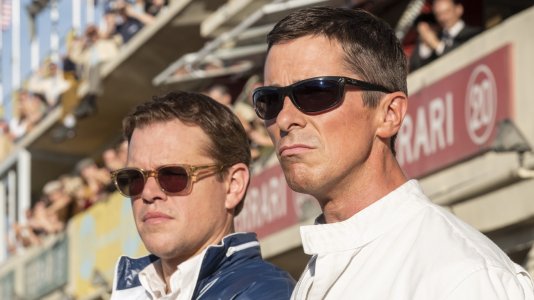
In our second entry of motorsport movie reviews in the lead up to the F1 movie, Luca has decided upon the film depicting the legend of Ford taking on Ferrari at Le Mans.
Every motorsport fan knows the legend of Ford and Ferrari, how Henry Ford II attempted to enter into a partnership with Enzo Ferrari only to be rudely dismissed at the last minute. Spurring an attempt by Ford to hit Ferrari where it would hurt the most, at the 24 Hours of Le Mans. Ford would go on to win the famed French race overall four times in a row starting in 1966.
With Ferrari getting back-to-back overall wins in the past two years since returning to the top flight of sportscar racing, that titanic battle is set to resume once more as Ford have announced they will be entering the Hypercar class for 2027. As marques, they are seemingly interlocked in a never ending war, like Laelaps and the Teumessian fox in Greek mythology, forever intertwined with each other.
In 2019, there was a movie focused on that period, Ford v Ferrari - or Le Mans '66 in some territories - which was directed by James Mangold. Two years prior, Mangold directed the X-Men movie Logan, which earned him an academy award nomination for best adapted screenplay.
The two main leads are Matt Damon (Jason Bourne in the Bourne franchise) and Christian Bale (Bruce Wayne/Batman in The Dark Knight trilogy) as motorsport legends Carroll Shelby and Ken Miles. The movie itself does a great job telling the story, although unlike Rush that we reviewed last month, it is plagued by a lot of overly exercised Hollywood tropes.
In the US, the movie is called Ford v Ferrari since there is a lot of national pride in Ford being an American brand. For the European audience though, that does not exist so they went with Le Mans '66 since they identify more with Le Mans rather than Ford. With all that being said, neither title really work for the story being told.
The story is predominantly focused on the friendship between Shelby and Miles, and whilst the former is a household name, Miles was never that well known until after this movie released. More on that later, but for now, the title is just the tip of the iceberg of when it comes to acclimatising a mainstream audience to this story in order to guarantee a higher return at the box office.
Watching this movie as a motorsport fan, a lot of things we take for granted are kind of overly spoonfed to the audience. For those who have watched the movie, there is a bit of an obsession with 7,000rpm and admittedly, this was a time that the cars were susceptible to breaking if they were pushed too hard. Nevertheless, it still becomes overly grinding even to casual movie viewers.
Another element that we hinted at in our previous review, the toing and froing. We all know from racing that we are - for the most part - always fully on throttle on a straight, and we cannot just press it a bit more when someone draws alongside. The Fast & Furious movies are all too guilty of doing this, and so is Ford v Ferrari.
What we are saying is that for us motorsport fanatics, this movie will at times annoy us. But moving past all that, Ford v Ferrari like Rush has been subsequently able to transcend the motorsport niche.
In a way, he was correct even if he was disingenuous about why he was not wanting Miles to drive for them. In a world of overly polished corporate formalism, a personality like Miles is in complete contradiction to that, and this story is all the better for it. Bale absolutely nails how Miles apparently was, and truly brings to life this underappreciated legend.
There is one scene inparticular that I find to be absolute gold, when a Porsche cuts off one of Miles' Ford teammates during the night at Le Mans, he talks the way I would in a sim race. He is the perfect juxtaposition to the corporate world that Ford represents. Carroll Shelby too, who Matt Damon plays to perfection as well as he has to juggle his red-blooded tendencies with playing the corporate game with Ford.
Of course, a racing movie needs to do one thing to be of interest to us racing enthusiasts, and that is depicting the racing. Unlike Rush, this movie's racing scenes are not so aggressive and are if anything, rather muted in comparison. But just because it is not as good as Rush in this department, does not make it bad. In fact, teamed with the brilliant Americana-based musical score by Marco Beltrami, it does not fail to give you goosebumps.
In truth, Iacocca was instrumental in getting the V8 engines that Shelby would put into the AC Cobra, so that scene could have played out very differently. Shelby could have greeted Iacocca like old friends and had every one of his employees made aware of how their guest played such an integral role in their success.
But the most major liberty taken is after Shelby informs Miles that Ford have vetoed his place in the line-up for Le Mans in 1965. In the movie, Miles stays behind at the Shelby headquarters in the aircraft hangar at Los Angeles International Airport and listens to the race on the radio. In truth, Miles did race at Le Mans that year with Ford, making it 45 laps in before retiring due to a gearbox problem.

Ford v Ferrari may not have as high octane racing scenes as Rush but they are still incredible. Image: 20th Century Studios
This creative licencing may have been to create a low point to rebound from, but also probably because with the movie already costing nearly $100M to make, they probably had to skip out on some racing scenes. For comparison, Rush somehow only had a $38M production budget so Ford v Ferrari was surely already very expensive to make without having another scene with a load of cars to film.
Speaking of which, the eagle eyed amongst us will probably notice that the scenes depicting the 1966 Daytona 24 Hours are filmed at Auto Club Speedway in Fontana, California. It is not as terrible as using the Hungaroring for Silverstone and Le Mans (like the Gran Turismo movie), but still worth pointing out since we racing fanatics are very observant for these things, unlike the majority of viewers.
Nevertheless, we as motorsport fans will have to overlook these elements when it comes to seeing what we love depicted in movies. As far as racing movies go, Ford v Ferrari in spite of these shortcomings is one of the best in recent years - if not one of the best, full stop.
 I rarely go to the movies anymore, but I do remember Ford v Ferrari's poster immediately catching my attention - ironically at a movie theater, though I don't remember what film my girlfriend and I were there to see at the time. What I do remember, however, is telling her pretty much immediately that I was gonna have to drag her to the theater that November to see Le Mans 66, as it is called here in Germany.
So we did, and despite some of the inaccuracies and typical Hollywood elements, I had a very good time. Sure, the racing history nerd in me had a few "oh come on!" moments, but those did not get in the way of a generally enjoyable movie.
While I am always happy to see as much accuracy as possible in settings like this, what I applaud Ford v Ferrari for is that it helped making Ken Miles' legacy known to more people. Any automotive or racing enthusiast knows the Ford GT40, but as far as I am aware, not too many knew about Miles' contributions in developing the car.
Of course, the movie ends in tragedy, as Miles is killed in a testing crash at Riverside (filmed at Willow Springs) in 1966. Ironically, considering the title of Luca's review, the Englishman was buried at the Hollywood Forever Cemetery in California, according to his Wikipedia page.
Which other motorsport movies should we review and what do you think of Ford v Ferrari/Le Mans '66? Let us know in the comments below, and join the discussion on our forums!
Every motorsport fan knows the legend of Ford and Ferrari, how Henry Ford II attempted to enter into a partnership with Enzo Ferrari only to be rudely dismissed at the last minute. Spurring an attempt by Ford to hit Ferrari where it would hurt the most, at the 24 Hours of Le Mans. Ford would go on to win the famed French race overall four times in a row starting in 1966.
With Ferrari getting back-to-back overall wins in the past two years since returning to the top flight of sportscar racing, that titanic battle is set to resume once more as Ford have announced they will be entering the Hypercar class for 2027. As marques, they are seemingly interlocked in a never ending war, like Laelaps and the Teumessian fox in Greek mythology, forever intertwined with each other.
In 2019, there was a movie focused on that period, Ford v Ferrari - or Le Mans '66 in some territories - which was directed by James Mangold. Two years prior, Mangold directed the X-Men movie Logan, which earned him an academy award nomination for best adapted screenplay.
The two main leads are Matt Damon (Jason Bourne in the Bourne franchise) and Christian Bale (Bruce Wayne/Batman in The Dark Knight trilogy) as motorsport legends Carroll Shelby and Ken Miles. The movie itself does a great job telling the story, although unlike Rush that we reviewed last month, it is plagued by a lot of overly exercised Hollywood tropes.
Ford v Ferrari Movie Review: The Problems
Beginning with the movie's title - or more appropriately titles - as it does indicate the issue with the movie falling foul of Hollywood's marketing tactics. With racing being expensive to just take part in let alone make a movie about, and most racing outside of F1 and NASCAR not being known to the majority of mainstream audiences, there was a lot of influence by the Hollywood machine to ensure this movie was as successful as possible.In the US, the movie is called Ford v Ferrari since there is a lot of national pride in Ford being an American brand. For the European audience though, that does not exist so they went with Le Mans '66 since they identify more with Le Mans rather than Ford. With all that being said, neither title really work for the story being told.
The story is predominantly focused on the friendship between Shelby and Miles, and whilst the former is a household name, Miles was never that well known until after this movie released. More on that later, but for now, the title is just the tip of the iceberg of when it comes to acclimatising a mainstream audience to this story in order to guarantee a higher return at the box office.
Watching this movie as a motorsport fan, a lot of things we take for granted are kind of overly spoonfed to the audience. For those who have watched the movie, there is a bit of an obsession with 7,000rpm and admittedly, this was a time that the cars were susceptible to breaking if they were pushed too hard. Nevertheless, it still becomes overly grinding even to casual movie viewers.
Another element that we hinted at in our previous review, the toing and froing. We all know from racing that we are - for the most part - always fully on throttle on a straight, and we cannot just press it a bit more when someone draws alongside. The Fast & Furious movies are all too guilty of doing this, and so is Ford v Ferrari.
What we are saying is that for us motorsport fanatics, this movie will at times annoy us. But moving past all that, Ford v Ferrari like Rush has been subsequently able to transcend the motorsport niche.
What It Does Right
What I love about this movie is showing the divide that exists between bureaucracy and adhocracy. It may give you the idea that Ford were prepared to do anything at all cost to win, but there was plenty of pushing down from above. One of Ford's executives has a grudge with Miles and attempts to prevent him from racing in a Ford, citing him as a public relations liability.In a way, he was correct even if he was disingenuous about why he was not wanting Miles to drive for them. In a world of overly polished corporate formalism, a personality like Miles is in complete contradiction to that, and this story is all the better for it. Bale absolutely nails how Miles apparently was, and truly brings to life this underappreciated legend.
There is one scene inparticular that I find to be absolute gold, when a Porsche cuts off one of Miles' Ford teammates during the night at Le Mans, he talks the way I would in a sim race. He is the perfect juxtaposition to the corporate world that Ford represents. Carroll Shelby too, who Matt Damon plays to perfection as well as he has to juggle his red-blooded tendencies with playing the corporate game with Ford.
Of course, a racing movie needs to do one thing to be of interest to us racing enthusiasts, and that is depicting the racing. Unlike Rush, this movie's racing scenes are not so aggressive and are if anything, rather muted in comparison. But just because it is not as good as Rush in this department, does not make it bad. In fact, teamed with the brilliant Americana-based musical score by Marco Beltrami, it does not fail to give you goosebumps.
Taking Liberties
For the many motorsport history buffs (like @Yannik Haustein) there will be some points in this movie that will make you go "Why did they change that?". One example being the idea that Shelby and Ford VP Lee Iacocca (portrayed by Jon Bernthal from The Walking Dead) only met when Iacocca visits the Shelby dealership to inquire about a potential partnership to take on Le Mans.In truth, Iacocca was instrumental in getting the V8 engines that Shelby would put into the AC Cobra, so that scene could have played out very differently. Shelby could have greeted Iacocca like old friends and had every one of his employees made aware of how their guest played such an integral role in their success.
But the most major liberty taken is after Shelby informs Miles that Ford have vetoed his place in the line-up for Le Mans in 1965. In the movie, Miles stays behind at the Shelby headquarters in the aircraft hangar at Los Angeles International Airport and listens to the race on the radio. In truth, Miles did race at Le Mans that year with Ford, making it 45 laps in before retiring due to a gearbox problem.
Ford v Ferrari may not have as high octane racing scenes as Rush but they are still incredible. Image: 20th Century Studios
This creative licencing may have been to create a low point to rebound from, but also probably because with the movie already costing nearly $100M to make, they probably had to skip out on some racing scenes. For comparison, Rush somehow only had a $38M production budget so Ford v Ferrari was surely already very expensive to make without having another scene with a load of cars to film.
Speaking of which, the eagle eyed amongst us will probably notice that the scenes depicting the 1966 Daytona 24 Hours are filmed at Auto Club Speedway in Fontana, California. It is not as terrible as using the Hungaroring for Silverstone and Le Mans (like the Gran Turismo movie), but still worth pointing out since we racing fanatics are very observant for these things, unlike the majority of viewers.
Nevertheless, we as motorsport fans will have to overlook these elements when it comes to seeing what we love depicted in movies. As far as racing movies go, Ford v Ferrari in spite of these shortcomings is one of the best in recent years - if not one of the best, full stop.
Editor's Take - Yannik
I rarely go to the movies anymore, but I do remember Ford v Ferrari's poster immediately catching my attention - ironically at a movie theater, though I don't remember what film my girlfriend and I were there to see at the time. What I do remember, however, is telling her pretty much immediately that I was gonna have to drag her to the theater that November to see Le Mans 66, as it is called here in Germany.So we did, and despite some of the inaccuracies and typical Hollywood elements, I had a very good time. Sure, the racing history nerd in me had a few "oh come on!" moments, but those did not get in the way of a generally enjoyable movie.
While I am always happy to see as much accuracy as possible in settings like this, what I applaud Ford v Ferrari for is that it helped making Ken Miles' legacy known to more people. Any automotive or racing enthusiast knows the Ford GT40, but as far as I am aware, not too many knew about Miles' contributions in developing the car.
Of course, the movie ends in tragedy, as Miles is killed in a testing crash at Riverside (filmed at Willow Springs) in 1966. Ironically, considering the title of Luca's review, the Englishman was buried at the Hollywood Forever Cemetery in California, according to his Wikipedia page.
Which other motorsport movies should we review and what do you think of Ford v Ferrari/Le Mans '66? Let us know in the comments below, and join the discussion on our forums!