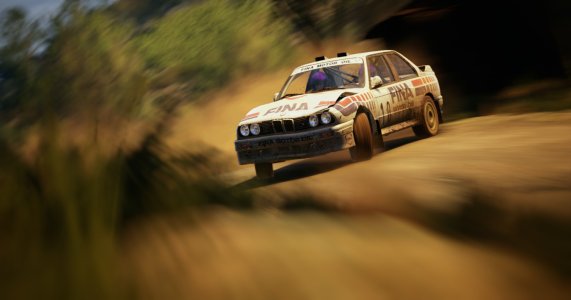
There is no denying that Rear Wheel Drive cars in EA Sports WRC are difficult to control with snap oversteer, but all hope is not lost as the setup screen is here to help. Here are some simple tips and tricks to make RWD cars in EA WRC easier to drive.
This week, EA Sports WRC finally received its final DLC announced so far. Alongside a selection of modern junior rally cars and current-century WRC icons was the Mk1 Escort RS 1600 (though it sports the larger 2-litre engine for some reason).
A brilliant and popular bit of kit in the real world of amateur rallying, it is a model that excited many of us here at OverTake. However, there is no denying that rear-wheel-drive cars are our least favourite models to drive in EA Sports WRC, and this particular model is no different.
Where other cars in the game rotate nicely into corners and squat upon power application, gripping into the road surface, rear-driven cars simply do not. Understeer on turn-in, snap oversteer on exit, and a mess of wheel corrections throughout, simply getting to the end of a stage is task enough. But with a few simple setup tips, this deadly corner exit character can be worked away, so here is how to fix snap oversteer spins in EA Sports WRC rear wheel drive cars.
If this issue does not get attention from the development team now that the title's future development plans are uncertain, there are some simple setup tips and tricks that will help you keep control of your rear-wheel-drive beast in EA WRC.

Always add rear toe in EA Sports WRC for less oversteer. Image credit: EA Sports
With that in mind, we recommend always adding Rear Toe In by raising the Toe value in EA Sports WRC by default. This adjustment works well on rear-wheel-drive cars and other drivetrain formats, helping to eradicate that vague feeling the rear end can get on faster rallies.

An open LSD in EA Sports WRC will reduce snappy oversteer in RWD cars. Image credit: EA Sports
This is due to the rear limited slip differential locking the axle too much, causing sudden power delivery, which you do not really want on loose surfaces. Instead, and whilst it may make the car slide earlier when getting on the power, we recommend lowering the LSD Driving Lock value to around 10%.
Not only will this make for a more progressive loss of grip, but it will also help rotate the car from the apex onwards. Do not overdo this on tarmac, however, where you will want to avoid the so-called single tyre fire, where you lose forward momentum from an inside wheel spinning too much.
If you also struggle with corner entry understeer, lower the LSD Braking Lock for better rotation on entry.

Softening the Rear anti-roll bar means more grip in EA Sports WRC. Image credit: EA Sports
As a result, we would advise only softening the Rear Anti-Roll Bar, dropping it to about half the value of the Front ARB. For rear or mid-engine cars like the Porsche 911 or Lancia Stratos, however, this figure will not want to be quite as low, instead sitting just below the front's value.
This weekend, we jump aboard the scariest cars in the game, rear-wheel-drive Group B machinery, and head to one of the newer venues in the title, Latvia. With over 60km of flat-out driving, this is how we separate the men from the boys and work out who can best use the above setup tweaks for a fast rear-wheel-drive racer.
What is your favourite class in EA Sports WRC? Let us know in the comments.
This week, EA Sports WRC finally received its final DLC announced so far. Alongside a selection of modern junior rally cars and current-century WRC icons was the Mk1 Escort RS 1600 (though it sports the larger 2-litre engine for some reason).
A brilliant and popular bit of kit in the real world of amateur rallying, it is a model that excited many of us here at OverTake. However, there is no denying that rear-wheel-drive cars are our least favourite models to drive in EA Sports WRC, and this particular model is no different.
Where other cars in the game rotate nicely into corners and squat upon power application, gripping into the road surface, rear-driven cars simply do not. Understeer on turn-in, snap oversteer on exit, and a mess of wheel corrections throughout, simply getting to the end of a stage is task enough. But with a few simple setup tips, this deadly corner exit character can be worked away, so here is how to fix snap oversteer spins in EA Sports WRC rear wheel drive cars.
How to Fix RWD Snap Oversteer in EA Sports WRC
Obviously, there is one very simple solution to reducing the number of spins, slides, and rear-wheel drive-induced crashes in EA Sports WRC, and that is to be a little gentler on the throttle pedal. However, we and many fans of the game have come to find that there is something a little odd in the core handling dynamics that needs a little TLC.If this issue does not get attention from the development team now that the title's future development plans are uncertain, there are some simple setup tips and tricks that will help you keep control of your rear-wheel-drive beast in EA WRC.
Tweak Your Alignement
Much like circuit racing or with cars featuring other drivetrain layouts, the first and easiest setup adjustment to make when struggling with oversteer is adjusting the Toe, specifically, rear toe. By making the rear tyre point towards the inside of the car when looking at it from above, you are essentially adding a bit of rear steering, helping to correct any slides.Always add rear toe in EA Sports WRC for less oversteer. Image credit: EA Sports
With that in mind, we recommend always adding Rear Toe In by raising the Toe value in EA Sports WRC by default. This adjustment works well on rear-wheel-drive cars and other drivetrain formats, helping to eradicate that vague feeling the rear end can get on faster rallies.
Open Differential Means Fewer Snaps
If, after adding Rear Toe In, you are still struggling with a snappy rear end, it is time to look at the differential. In fact, it appears to be most on initial power application out of corners, or even through faster turns that RWD cars in EA WRC tend to swap ends.An open LSD in EA Sports WRC will reduce snappy oversteer in RWD cars. Image credit: EA Sports
This is due to the rear limited slip differential locking the axle too much, causing sudden power delivery, which you do not really want on loose surfaces. Instead, and whilst it may make the car slide earlier when getting on the power, we recommend lowering the LSD Driving Lock value to around 10%.
Not only will this make for a more progressive loss of grip, but it will also help rotate the car from the apex onwards. Do not overdo this on tarmac, however, where you will want to avoid the so-called single tyre fire, where you lose forward momentum from an inside wheel spinning too much.
If you also struggle with corner entry understeer, lower the LSD Braking Lock for better rotation on entry.
Soften the Rear
If all else fails, you can also try to soften the rear end, ensuring the rear wheels optimise their footprint on the ground, improving traction. However, go too far, and you will worsen the typical EA Sports WRC float feeling.Softening the Rear anti-roll bar means more grip in EA Sports WRC. Image credit: EA Sports
As a result, we would advise only softening the Rear Anti-Roll Bar, dropping it to about half the value of the Front ARB. For rear or mid-engine cars like the Porsche 911 or Lancia Stratos, however, this figure will not want to be quite as low, instead sitting just below the front's value.
Put Your RWD Skills to the Test
Now that you have all the tools in your wheelhouse for a more pleasurable rear wheel drive experience in EA Sports WRC, it is time to leave the service park and hit the road. And what better way to do so than with the RD Rally Club?This weekend, we jump aboard the scariest cars in the game, rear-wheel-drive Group B machinery, and head to one of the newer venues in the title, Latvia. With over 60km of flat-out driving, this is how we separate the men from the boys and work out who can best use the above setup tweaks for a fast rear-wheel-drive racer.
What is your favourite class in EA Sports WRC? Let us know in the comments.