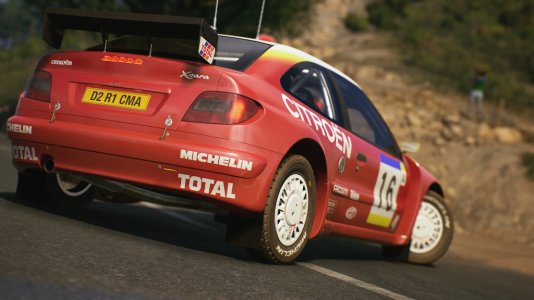
Rally1 cars are usually comfortably faster than those of the lower classes – both in the real WRC and in EA Sports WRC. However, there used to be a class that managed to topple the giants from time to time – Kit Cars.
The late 1990s were an interesting, exciting time for motorsport. Sportscar racing saw diverse grids at Le Mans, Michael Schumacher and Mika Häkkinen battled for the World Championship in F1, and in WRC, iconic drivers like Tommi Mäkinen, Richard Burns, Carlos Sainz (Senior, not his smoothly operating son) or Colin McRae blasted over all sorts of surfaces, often sideways. You know, usual rally stuff.
Since 1997, they used vehicles built to World Rally Car regulations instead of the Group A set of rules that had shaped the de-facto top class from 1987 until 1996. There was one exception among the manufacturers, namely Mitsubishi, who still fielded Group A-spec Lancers, which did not get into Mäkinens way en route to four successive titles between 1996 and 1999.
So far, so ordinary. But what was less ordinary were that these Kit Cars – which derived their names from sets of certain homologated parts – occasionally rose up and flat-out beat the top-class WRC cars as the 1990s concluded.
Signs of this appeared in 1997 when Gilles Panizzi managed to score a third place in that year’s Rally Catalunya – outright, not in class. And then, the Frenchman only went and did it again at the next event, the Tour de Corse, with his teammate Francois Delecour following suit in fourth place.
Both events were held on tarmac, which apparently complemented the Kit Cars. But even the 2-Litre World Rally Cup was held on other surfaces, including gravel, of course, so you could not exactly go ahead and put all your eggs in the non-loose surface basket, right?

Peugeot 306 Maxi. Image: Jorjum on Wikimedia Commons, available for redistribution via the CC-BY SA 3.0 deed
And that was an undeniable advantage on tarmac stages, which Citroen and Philippe Bugalski demonstrated in 1999. Instead of just getting close to an overall victory, the Frenchman and his co-driver Jean-Paul Chiaroni only went on to plonk their Xsara Kit Car in first place overall at Rally Catalunya. And then they did it again next time out in France at the Tour de Corse.
Of course, this injustice towards the top-class WRC cars could not stand in the eyes of the FIA. The result: new regulations from 2000 onwards, with the JWRC running Super 1600-spec cars and the Production World Rally Championship (PWRC) using Super 2000 specfications to replace the 2-Litre World Rally Cup. Boo.
Luckily, the spectacular tarmac weapons live on in EA Sports WRC. With the recent release of the Le Maestros DLC pack, the Citroen Xsara Kit Car joined the F2 Kit Cars roster, increasing the car count of that class to seven.
Strapping into one of these wide-arched rally rockets is great fun and rather intense indeed – particularly on tarmac, of course. Tackling the busy stages of Rally Mediterraneo (so essentially Tour de Corse) in them results in rather frantic runs, but once you finally get a chance to catch your breath after stopping once you crossed the finish line, it will feel like a proper achievement to have kept it clean.
Just don’t expect to be all that competitive against WRC cars on anything but tarmac.
What is your opinion on Kit Cars in rallying and EA Sports WRC? Let us know in the comments below!
The late 1990s were an interesting, exciting time for motorsport. Sportscar racing saw diverse grids at Le Mans, Michael Schumacher and Mika Häkkinen battled for the World Championship in F1, and in WRC, iconic drivers like Tommi Mäkinen, Richard Burns, Carlos Sainz (Senior, not his smoothly operating son) or Colin McRae blasted over all sorts of surfaces, often sideways. You know, usual rally stuff.
Since 1997, they used vehicles built to World Rally Car regulations instead of the Group A set of rules that had shaped the de-facto top class from 1987 until 1996. There was one exception among the manufacturers, namely Mitsubishi, who still fielded Group A-spec Lancers, which did not get into Mäkinens way en route to four successive titles between 1996 and 1999.
2 Litres of Glory
Below the WRC cars, however, there was the FIA 2-Litre World Rally Cup, as it was officially called. Having contested its inaugural season in 1993, the series’ bread and butter were front-wheel driven, naturally-aspriated cars. Manufacturers like Seat, Skoda, Peugeot and later Renault and Citroen all competed.So far, so ordinary. But what was less ordinary were that these Kit Cars – which derived their names from sets of certain homologated parts – occasionally rose up and flat-out beat the top-class WRC cars as the 1990s concluded.
Signs of this appeared in 1997 when Gilles Panizzi managed to score a third place in that year’s Rally Catalunya – outright, not in class. And then, the Frenchman only went and did it again at the next event, the Tour de Corse, with his teammate Francois Delecour following suit in fourth place.
Both events were held on tarmac, which apparently complemented the Kit Cars. But even the 2-Litre World Rally Cup was held on other surfaces, including gravel, of course, so you could not exactly go ahead and put all your eggs in the non-loose surface basket, right?
Peugeot 306 Maxi. Image: Jorjum on Wikimedia Commons, available for redistribution via the CC-BY SA 3.0 deed
Peugeot & Citroen Go All In
Well, either no one told Peugeot and Citroen that, or they simply did not care. Because that is exactly what they did, despite that making them sitting ducks at gravel events. The result was closer to a touring car than a rally vehicle, as the Peugeot 306 Maxi and Citroen Xsara looked a lot more like circuit racing cars than sidways-going gravel rockets.And that was an undeniable advantage on tarmac stages, which Citroen and Philippe Bugalski demonstrated in 1999. Instead of just getting close to an overall victory, the Frenchman and his co-driver Jean-Paul Chiaroni only went on to plonk their Xsara Kit Car in first place overall at Rally Catalunya. And then they did it again next time out in France at the Tour de Corse.
Of course, this injustice towards the top-class WRC cars could not stand in the eyes of the FIA. The result: new regulations from 2000 onwards, with the JWRC running Super 1600-spec cars and the Production World Rally Championship (PWRC) using Super 2000 specfications to replace the 2-Litre World Rally Cup. Boo.
Luckily, the spectacular tarmac weapons live on in EA Sports WRC. With the recent release of the Le Maestros DLC pack, the Citroen Xsara Kit Car joined the F2 Kit Cars roster, increasing the car count of that class to seven.
F2 Kit Cars In EA Sports WRC
- Citroen Xsara Kit Car
- Ford Escort Mk 6 Maxi
- Peugeot 306 Maxi
- Renault Maxi Mégane
- Seat Ibiza Kit Car
- Vauxhall Astra Rally Kit Car
- Volkswagen Golf IV Kit Car
Strapping into one of these wide-arched rally rockets is great fun and rather intense indeed – particularly on tarmac, of course. Tackling the busy stages of Rally Mediterraneo (so essentially Tour de Corse) in them results in rather frantic runs, but once you finally get a chance to catch your breath after stopping once you crossed the finish line, it will feel like a proper achievement to have kept it clean.
Just don’t expect to be all that competitive against WRC cars on anything but tarmac.
What is your opinion on Kit Cars in rallying and EA Sports WRC? Let us know in the comments below!