In the latest 0.35 update for BeamNG, the physics and JBeam calculations have been adjusted. Although the changes avoided the headlines at release, they have had a tremendous impact on the gamification and playability of BeamNG for both sim racers and the wider BeamNG audience.
BeamNG has always had a reputation for being the most intricate simulator for damage and realistically calculated crashing. However, the cars have always felt rather delicate and precious. Any slight impact with a kerb would either cause your wheel to be off the vehicle or throw the whole suspension geometry so far off that it would make the car undrivable. These JBeam and physics updates rectify the damage given.

Bruckell Bastion rear-end accident, both cars drove away thanks to the new, more substantial suspension strength.
Unlike most racing games, BeamNG uses Softbody physics instead of RigidBody simulations. Without overly complicating things, this means that physical objects, such as cars, are deformable. This is possible through the use of Node and Beam structures. Think back to the early magnetic building toys popular in classrooms worldwide throughout the 1990s and 2000s!
JBeam uses nodes and beams to simulate a vehicle's chassis. Nodes are Points in 3D space; think of them like joints or connection points on a car, whereas beams are connections between nodes (like springs or struts that can stretch, compress, or break). When these two factors work together within BeamNG, they create a flexible framework that acts like a physical chassis or body.

Suspension components are much stronger than they were, and when they do break, they break realistically!
JBeam files define most of what the vehicles in BeamNG can do and achieve. These Jbeams simulate everything, such as the basic and more advanced Collision properties, suspension geometry, engine and drivetrain logic, and the subject of this article, Vehicle weight and mass distribution across the axles.
Implementing JBeam mathematics makes BeamNG's physics unique in the world of simulation titles—every bent bumper and damaged radiator results from calculations between thousands of nodes and beams. Think of it as the brain behind the complex calculations that form BeamNG's physics engine.

Autobello Stambello is much more robust off-road!
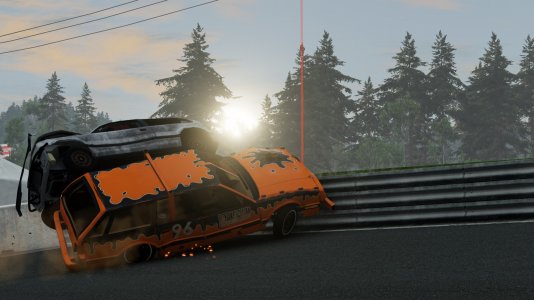
With these new changes to the physics, racing and derby events like demolition derbies and banger racing are much more doable now than in any of the previous versions of BeamNG. Complaints about the car's durability have been long-standing for several update cycles, and this is a fantastic step in the right direction.
Engine damage is also much more common with significant front impacts, which shut the engine down and destroy it instead of keeping it running, even if it was out of the vehicle!
What do you think about these new physics additions and JBeam changes? Let us know in the comments down below!
BeamNG has always had a reputation for being the most intricate simulator for damage and realistically calculated crashing. However, the cars have always felt rather delicate and precious. Any slight impact with a kerb would either cause your wheel to be off the vehicle or throw the whole suspension geometry so far off that it would make the car undrivable. These JBeam and physics updates rectify the damage given.
Bruckell Bastion rear-end accident, both cars drove away thanks to the new, more substantial suspension strength.
Unlike most racing games, BeamNG uses Softbody physics instead of RigidBody simulations. Without overly complicating things, this means that physical objects, such as cars, are deformable. This is possible through the use of Node and Beam structures. Think back to the early magnetic building toys popular in classrooms worldwide throughout the 1990s and 2000s!
JBeam structure within BeamNG
JBeam (short for JSON Beam) is a core system in BeamNG that defines the physical structure and behavior of vehicles and objects. It is a data format used to create soft-body physics models, allowing vehicles to deform, bend, and react realistically to forces like crashes or terrain interaction, something BeamNG is most famous for in the realm of sim racing orJBeam uses nodes and beams to simulate a vehicle's chassis. Nodes are Points in 3D space; think of them like joints or connection points on a car, whereas beams are connections between nodes (like springs or struts that can stretch, compress, or break). When these two factors work together within BeamNG, they create a flexible framework that acts like a physical chassis or body.
Suspension components are much stronger than they were, and when they do break, they break realistically!
JBeam files define most of what the vehicles in BeamNG can do and achieve. These Jbeams simulate everything, such as the basic and more advanced Collision properties, suspension geometry, engine and drivetrain logic, and the subject of this article, Vehicle weight and mass distribution across the axles.
Implementing JBeam mathematics makes BeamNG's physics unique in the world of simulation titles—every bent bumper and damaged radiator results from calculations between thousands of nodes and beams. Think of it as the brain behind the complex calculations that form BeamNG's physics engine.
Physics improvements across the BeamNG fleet
Outside of the JBeam changes, many vehicles also saw physics improvements. For instance, the Autobello Stambecco underwent a total overhaul of how it deforms on impact. The development team also added collision physics to its cargo holding area, enhancing its structural integrity and collision response. These sorts of changes make BeamNG such a detail-oriented simulator that, without prior knowledge, you would never have picked up on.Autobello Stambello is much more robust off-road!
With these new changes to the physics, racing and derby events like demolition derbies and banger racing are much more doable now than in any of the previous versions of BeamNG. Complaints about the car's durability have been long-standing for several update cycles, and this is a fantastic step in the right direction.
Engine damage is also much more common with significant front impacts, which shut the engine down and destroy it instead of keeping it running, even if it was out of the vehicle!
What do you think about these new physics additions and JBeam changes? Let us know in the comments down below!