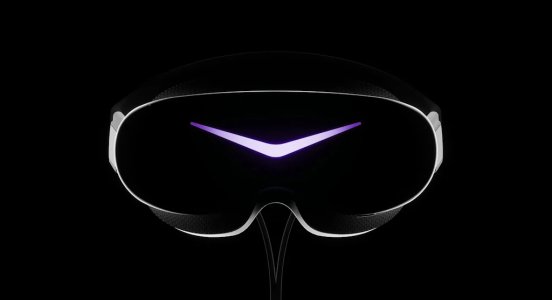
VR headset manufacturer Pimax has unveiled a new version of its smallest headset: The Pimax Dream Air SE weighs in at less than 150 grams - while aiming to deliver a high-end experience.
Sim racers and VR - a relationship that was meant to be. Many of those who made the switch from a monitor-based setup to a Virtual Reality headset state that they simply cannot go back, as the immersion is almost impossible to beat.
However, comfort is still a bit of an issue sometimes. When we reviewed the Pimax Crystal and Pimax Crystal Light headsets, we liked their visuals - quite alot, actually, as they boast impressive specs since they are high-end devices. One big issue is their size, however, which also does not help with weight, and, in turn, comfort when wearing the headsets for an extended amount of time.
Manufacturers are trying to make their devices smaller and more comfortable. One of the more prominent examples would be the Bigscreen Beyond, which in its second iteration, weighs only 107 grams and can be ordered with a custom-made face cushion that is based on a 3D scan of your face. The Beyond 2 starts at €1.369 (about $1.522 USD).

As the Dream Air is still quite heavy on your wallet starting at $1899 USD, a light version has now been unveiled - quite literally. The Pimax Dream Air SE went on even more of a diet, weighing less than 150 grams. It still features integrated eye tracking, pancake lenses, and integrated SLAM tracking, just like its bigger brother. Both versions also come with a self-adjusting headstrap, in case you are not afraid of machines taking over and squishing your face a bit.
The main difference is that the Dream Air SE's panels offer smaller base resolutions. The micro-OLED panels feature 2560 x 2560 pixels and a smaller FOV, given as a '+90° Stereo overlap' instead of field of view like for the standard Dream Air.

For sim racers, this could be a great alternative: Sleek, low weight, and starting at $899 USD if you opt for the controller-less version. Lighthouse versions for either model are available, too. The Dream Air SE is expected to ship in Q3 2025, as is the Dream Air.
Both headsets will feature hand-tracking capabilities as well, as Pimax is looking to debut the feature, also in Q3. It will also be available on the Crystal Light and Crystal Super. Other updates that are supposed to arrive soon are 60G Airlink to introduce wireless capabilitiesm, and the Crystal Super Optical Engine.
Pimax had recently made sim racing-specific headlines when the manufacturer was revealed as an investor in Motorsport Games. The publisher/studio that is currently developing Le Mans Ultimate is looking to benefit from Pimax' knowledge for its VR implementation, while Pimax should benefit from the studio's sim racing expertise for new developments in its hardware.
What are your thoughts on the Pimax Dream Air SE? Let us know in the comments below and join the discussion in our hardware forum!
Sim racers and VR - a relationship that was meant to be. Many of those who made the switch from a monitor-based setup to a Virtual Reality headset state that they simply cannot go back, as the immersion is almost impossible to beat.
However, comfort is still a bit of an issue sometimes. When we reviewed the Pimax Crystal and Pimax Crystal Light headsets, we liked their visuals - quite alot, actually, as they boast impressive specs since they are high-end devices. One big issue is their size, however, which also does not help with weight, and, in turn, comfort when wearing the headsets for an extended amount of time.
Manufacturers are trying to make their devices smaller and more comfortable. One of the more prominent examples would be the Bigscreen Beyond, which in its second iteration, weighs only 107 grams and can be ordered with a custom-made face cushion that is based on a 3D scan of your face. The Beyond 2 starts at €1.369 (about $1.522 USD).
Lighter Weight, But Less Resolution
Pimax is also on a quest to reduce the size and weight of its headsets. Unveiled originally in December 2024 already, the Pimax Dream Air manages to weigh in at less than 180 grams while offering a 105-degree field of view and Sony micro-OLED panels with a 3840 x 3552 pixel resolution per eye in addition to integrated eye tracking, among other things.As the Dream Air is still quite heavy on your wallet starting at $1899 USD, a light version has now been unveiled - quite literally. The Pimax Dream Air SE went on even more of a diet, weighing less than 150 grams. It still features integrated eye tracking, pancake lenses, and integrated SLAM tracking, just like its bigger brother. Both versions also come with a self-adjusting headstrap, in case you are not afraid of machines taking over and squishing your face a bit.
The main difference is that the Dream Air SE's panels offer smaller base resolutions. The micro-OLED panels feature 2560 x 2560 pixels and a smaller FOV, given as a '+90° Stereo overlap' instead of field of view like for the standard Dream Air.
For sim racers, this could be a great alternative: Sleek, low weight, and starting at $899 USD if you opt for the controller-less version. Lighthouse versions for either model are available, too. The Dream Air SE is expected to ship in Q3 2025, as is the Dream Air.
Both headsets will feature hand-tracking capabilities as well, as Pimax is looking to debut the feature, also in Q3. It will also be available on the Crystal Light and Crystal Super. Other updates that are supposed to arrive soon are 60G Airlink to introduce wireless capabilitiesm, and the Crystal Super Optical Engine.
Pimax had recently made sim racing-specific headlines when the manufacturer was revealed as an investor in Motorsport Games. The publisher/studio that is currently developing Le Mans Ultimate is looking to benefit from Pimax' knowledge for its VR implementation, while Pimax should benefit from the studio's sim racing expertise for new developments in its hardware.
What are your thoughts on the Pimax Dream Air SE? Let us know in the comments below and join the discussion in our hardware forum!