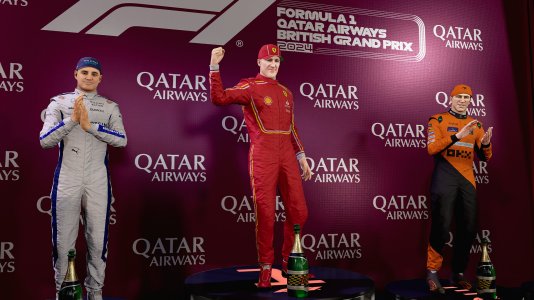
Every year since 2009, Codemasters have released the officially licenced Formula One game and this year is set to be no different. But it could represent a major shift, akin to what they did with EA Sports WRC.
The Formula One season began over the weekend, much to the relief of many F1 viewers who in past years would have gotten their fix during the winter break by loading up the previous season's F1 game. However with F1 24, it signalled a low point for the franchise in terms of sales and reputation.
Codemasters and EA Sports are beginning the process of rolling out the beta for the next F1 game. Whilst it may be a stretch, the title they have given it might perhaps indicate a change that many players may welcome.
With that being said, the gap between game releases can mean quite the time crunch for developers, and this can often result in a few issues squeezing through the cracks. The F1 games are no stranger to this, with many bugs frequently carrying over to the next game and as a result, a lack of time to fix them supposedly.
There was a point not long after F1 23 released when it was discovered that even with equal performance enabled in online, the tyre wear was not the same across the cars. That is just one of the mildest examples of issues with the F1 games, and players have become increasingly fed up with the frequency of such issues and seemingly an unwillingness by the developers to deal with them.
This has perhaps contributed to why the series has been on a downward trajectory in sales. An estimate in Steam sales from VG Insights claim that F1 24 has sold 378,000 copies, whilst F1 23 sold 520,000 units and F1 2020 sold 1.2 million. The games have attempted to add features to keep things fresh over the years like road-going supercars and a story mode, but little seemed to work.
With the licence apparently up for renewal, it may take something drastic for Codemasters and EA to continue holding it. So with the official F1 game socials not referring to the beta playtest for the upcoming title as F1 25, it could be pointing to the series going from an annual release to a standalone that will receive updates each year. Much like another racing game under the Codemasters and EA Sports umbrella.
But that turned out to not be the case as when EA Sports WRC received a 2024 season update on top of its base 2023 season content, it was made clear that the game would not see a successor for the year following its release. Considering EA's reputation for attempting to squeeze every penny possible out of game releases among many players, this was a noteworthy shift in practices by the company.
With Codemasters introducing a level of consistency with the same title covering multiple seasons, was it maybe laying the groundwork for their flagship licenced racing series to follow suit?
We have already seen the most recent F1 Manager game break away from being restricted to just the one season in the previous titles. With F1 Manager 24, any successor the game would have had is no longer happening so whether that means the same thing for the next F1 game, we cannot say for certain just yet.
But if EA and Codemasters fully intend to abandon the annual release model and create a definitive F1 game that will service for multiple years, that would point to a massive shift in priorities. They could keep the formula that had served them so well, but clearly the sales figures and reputation may be causes for concern that they need to respond to.
If this ends up being their plan, to have the next F1 game not being titled F1 25 and instead EA Sports F1 with yearly updates, this can only be good news for us players.
Therefore for every game-breaking bug that exists in the current game, tackling it may result in time being taken away from developing the next one. This can result in a few more of those bugs popping up in future games, making it a bit of a vicious cycle. Publishers for other annual releases attempt to split their games across multiple different studios to ease strain on developers.
Activision with the Call of Duty franchise for example, they have three different studios to develop those titles. But of course, even then there are major bugs in those games too. If it is not a smooth process developing one game every three years, doing one every year surely cannot be a walk in the park. So with the same game over multiple years, it will mean plenty more time allotted to fixing bugs in theory.
Leaving that aside for a moment, a standalone title may also mean the return of quite the popular feature.

This image of the 2020 Mercedes F1 was created to trick the playerbase into believing classic cars were returning. Image: @joshmerrin on Twitter
A few weeks ago, the image depicted above began making the rounds on social media. It appeared to show the 2020 Mercedes W11 on what seems to be the Miami circuit with F1 25 bannering plastered on the sides of the track, which was confirmed to be a doctored image by the original leaker. Nevertheless, with classic cars disappearing from the series after F1 2020, many have wanted their return and bemoaned their absence, wondering why they were removed at all.
Licencing could be a reason - we do not know how these deals are structured exactly, but it seems possible that they only covered a set number of games. It might be easy enough to get the licence for the official F1 and F2 teams since they apparently permit it as part of the deal to take part in the series, but for classic cars? A fair chunk of them might come from teams that do not exist anymore, and since they do not race in competition, the rights holders may be able to set the terms for their inclusion into a game.
That could very well not be the case, but a logical explanation as to why the classic cars were removed was because the upkeep for licencing these cars for a new game each year might have been deemed as not worth the cost to Codemasters and EA. The majority of F1 game players are most likely only driving the current season cars, and it seems that not enough were driving the classic cars. Which does beg the question as to why they replaced them with the road going supercars considering even less people drove those, but that is another matter.
If they were to transition to a standalone title, it may be less of a financial strain to licence the cars for one game over the course of a few years. Of course, it may well be the case that the licencing for a lot of the cars that featured from F1 2017 to F1 2020 expired after the latter's release and it was not a case of renewing after each year.
But assuming it is a case of licencing cars on a game-by-game basis, maybe Codemasters can afford to bring the classic cars back. Many of us dedicated historical racing enthusiasts will definitely appreciate bringing them back, that is for sure. Perhaps even a bunch of past season tracks, which will certainly see more usage out of the casual gaming demographic as well.
Of course, all of this is stemming from the fact that they titled the beta playtest for the next game as EA Sports Beta F1 could be just a case of looking too deeply into it. But the precedent has been set by EA Sports WRC not being an annual game when everyone expected it to be just the 2023 WRC season game.
One thing is for sure, with the beta playtest rolling out, it will not be long before we learn of details for the next F1 game, whether it is titled F1 25 or EA Sports F1. We have already reached out to try and answer this question, but have not received a reply - yet.
Would you like to see the F1 games move away from the annual release model? Let us know in the comments below and join the discussion in our F1 game series forum!
The Formula One season began over the weekend, much to the relief of many F1 viewers who in past years would have gotten their fix during the winter break by loading up the previous season's F1 game. However with F1 24, it signalled a low point for the franchise in terms of sales and reputation.
Codemasters and EA Sports are beginning the process of rolling out the beta for the next F1 game. Whilst it may be a stretch, the title they have given it might perhaps indicate a change that many players may welcome.
The Problem With Annual Releases
There are many major franchise games that tend to have new releases annually, predominantly sports games like FC (formerly FIFA) and Madden but also the Call of Duty games. Of course, this practice results in a guarantee of players paying full price for the new game and an influx of revenue more so than games that release a few years apart.With that being said, the gap between game releases can mean quite the time crunch for developers, and this can often result in a few issues squeezing through the cracks. The F1 games are no stranger to this, with many bugs frequently carrying over to the next game and as a result, a lack of time to fix them supposedly.
There was a point not long after F1 23 released when it was discovered that even with equal performance enabled in online, the tyre wear was not the same across the cars. That is just one of the mildest examples of issues with the F1 games, and players have become increasingly fed up with the frequency of such issues and seemingly an unwillingness by the developers to deal with them.
This has perhaps contributed to why the series has been on a downward trajectory in sales. An estimate in Steam sales from VG Insights claim that F1 24 has sold 378,000 copies, whilst F1 23 sold 520,000 units and F1 2020 sold 1.2 million. The games have attempted to add features to keep things fresh over the years like road-going supercars and a story mode, but little seemed to work.
With the licence apparently up for renewal, it may take something drastic for Codemasters and EA to continue holding it. So with the official F1 game socials not referring to the beta playtest for the upcoming title as F1 25, it could be pointing to the series going from an annual release to a standalone that will receive updates each year. Much like another racing game under the Codemasters and EA Sports umbrella.
EA Sports F1: A Multi-Year Standalone?
Starting from 2023, the World Rally Championship licence landed at Codemasters and EA Sports after it had been with Nacon and Kylotonn since 2015. The French studio released a WRC game every year when they had the licence as did Milestone before them, and many expected EA and Codemasters to follow suit.But that turned out to not be the case as when EA Sports WRC received a 2024 season update on top of its base 2023 season content, it was made clear that the game would not see a successor for the year following its release. Considering EA's reputation for attempting to squeeze every penny possible out of game releases among many players, this was a noteworthy shift in practices by the company.
With Codemasters introducing a level of consistency with the same title covering multiple seasons, was it maybe laying the groundwork for their flagship licenced racing series to follow suit?
We have already seen the most recent F1 Manager game break away from being restricted to just the one season in the previous titles. With F1 Manager 24, any successor the game would have had is no longer happening so whether that means the same thing for the next F1 game, we cannot say for certain just yet.
But if EA and Codemasters fully intend to abandon the annual release model and create a definitive F1 game that will service for multiple years, that would point to a massive shift in priorities. They could keep the formula that had served them so well, but clearly the sales figures and reputation may be causes for concern that they need to respond to.
If this ends up being their plan, to have the next F1 game not being titled F1 25 and instead EA Sports F1 with yearly updates, this can only be good news for us players.
Benefits Of A Standalone Title
First things first, the bugs. Whilst we cannot claim to know what goes into developing these games, it cannot be too much of a stretch to suggest that by having a game being developed on top of working on the current one, it can result in diverting resources and development time.Therefore for every game-breaking bug that exists in the current game, tackling it may result in time being taken away from developing the next one. This can result in a few more of those bugs popping up in future games, making it a bit of a vicious cycle. Publishers for other annual releases attempt to split their games across multiple different studios to ease strain on developers.
Activision with the Call of Duty franchise for example, they have three different studios to develop those titles. But of course, even then there are major bugs in those games too. If it is not a smooth process developing one game every three years, doing one every year surely cannot be a walk in the park. So with the same game over multiple years, it will mean plenty more time allotted to fixing bugs in theory.
Leaving that aside for a moment, a standalone title may also mean the return of quite the popular feature.
This image of the 2020 Mercedes F1 was created to trick the playerbase into believing classic cars were returning. Image: @joshmerrin on Twitter
A few weeks ago, the image depicted above began making the rounds on social media. It appeared to show the 2020 Mercedes W11 on what seems to be the Miami circuit with F1 25 bannering plastered on the sides of the track, which was confirmed to be a doctored image by the original leaker. Nevertheless, with classic cars disappearing from the series after F1 2020, many have wanted their return and bemoaned their absence, wondering why they were removed at all.
Licencing could be a reason - we do not know how these deals are structured exactly, but it seems possible that they only covered a set number of games. It might be easy enough to get the licence for the official F1 and F2 teams since they apparently permit it as part of the deal to take part in the series, but for classic cars? A fair chunk of them might come from teams that do not exist anymore, and since they do not race in competition, the rights holders may be able to set the terms for their inclusion into a game.
That could very well not be the case, but a logical explanation as to why the classic cars were removed was because the upkeep for licencing these cars for a new game each year might have been deemed as not worth the cost to Codemasters and EA. The majority of F1 game players are most likely only driving the current season cars, and it seems that not enough were driving the classic cars. Which does beg the question as to why they replaced them with the road going supercars considering even less people drove those, but that is another matter.
If they were to transition to a standalone title, it may be less of a financial strain to licence the cars for one game over the course of a few years. Of course, it may well be the case that the licencing for a lot of the cars that featured from F1 2017 to F1 2020 expired after the latter's release and it was not a case of renewing after each year.
But assuming it is a case of licencing cars on a game-by-game basis, maybe Codemasters can afford to bring the classic cars back. Many of us dedicated historical racing enthusiasts will definitely appreciate bringing them back, that is for sure. Perhaps even a bunch of past season tracks, which will certainly see more usage out of the casual gaming demographic as well.
Will It Happen?
Considering the problems that Codemasters and EA Sports have been facing, transitioning the F1 game series from an annual release to a standalone with annual updates seems like it is not too far fetched. Like we mentioned earlier, there is way more revenue to be made with annual releases of a game series, but with F1 24's sales being as poor as they were, maybe they drained this lake dry.Of course, all of this is stemming from the fact that they titled the beta playtest for the next game as EA Sports Beta F1 could be just a case of looking too deeply into it. But the precedent has been set by EA Sports WRC not being an annual game when everyone expected it to be just the 2023 WRC season game.
One thing is for sure, with the beta playtest rolling out, it will not be long before we learn of details for the next F1 game, whether it is titled F1 25 or EA Sports F1. We have already reached out to try and answer this question, but have not received a reply - yet.
Would you like to see the F1 games move away from the annual release model? Let us know in the comments below and join the discussion in our F1 game series forum!